
Cart
0
Summary
Got blue smoke pouring out your tailpipe, mysterious oil vanishing, and weird engine noises ruining your drive day? Worn piston rings can sneak up on you and turn your fun ride into a costly garage nightmare. This laid‑back guide walks through all the classic bad piston rings symptoms, how to tell them apart from faulty valve seals, typical repair costs, what failing rings actually look and sound like, plus whether you can still drive with bad piston rings. Save yourself avoidable engine meltdown and expensive do‑overs.
Ever hopped in your car, fired it up, and thought “Wait a second, my engine is acting absolutely unhinged”? One minute you are cruising down the road enjoying your tunes, the next minute you see blue smoke billowing behind you like you are filming a low‑budget action movie. A whole list of culprits could be to blame, but worn‑out piston rings sit near the very top of that suspect list.
Most regular car owners never give piston rings a single thought. These tiny metal rings hide deep inside your engine block, doing two critical jobs without any fanfare. They seal combustion pressure inside each cylinder to keep your power up, and they hold motor oil back so it does not sneak up into the combustion chamber and get burned away. When those little rings wear out, lose tension, crack, or get gummed up with carbon gunk, chaos begins. Your engine starts misbehaving in all sorts of annoying, wallet‑draining ways.
Lots of DIY drivers jump straight to buying expensive parts or tearing down the whole motor before they even confirm piston rings are the real villain. That is where this article steps in. We are keeping things real, no overly‑technical textbook jargon. We will cover every major bad piston ring symptom, compare bad piston rings vs valve seals, break down repair expenses, describe bad piston ring sound and appearance, and answer the big burning question: can I drive with bad piston rings? By the end, you will know exactly what warning signs to watch for and your next smart move.
Clear‑Cut Symptoms Of Bad Piston Rings
You do not need to be a professional gearhead to spot failing piston rings. Your car will throw plenty of obvious hints, if you know what to look for.
Quick Reference Table: Bad Piston Rings Warning Signs
| Symptom | What Is Actually Going On |
|---|---|
| Blue exhaust smoke on acceleration | Oil slips past worn rings and burns inside cylinders |
| Unexplained high oil consumption with no external leaks | Oil creeps up past piston rings into the combustion chamber |
| Noticeable loss of engine power & sluggish acceleration | Lost cylinder compression reduces horsepower output |
| Rough idle and random engine misfires | Uneven compression across multiple cylinders |
| Fouled, oil‑soaked spark plugs | Oil coats spark plug tips due to ring leakage |
| Decreased fuel mileage | Poor combustion efficiency caused by low cylinder compression |
Blue Smoke Blasting From The Tailpipe
This is the poster‑child red flag for bad piston rings. Hit the gas hard, and thick bluish‑grey smoke puffs out your exhaust. White smoke usually points to coolant issues, black smoke means too much fuel, but blue smoke almost always equals burning oil.
Do not brush this off as “my old car just burns a little oil”. That smoke is your expensive motor oil going up in thin air. Lots of folks shrug it off until one day the smoke gets so thick you cannot see behind you. That is when minor wear snowballs into major engine damage.
Mysterious Oil Disappearing (No Visible Leaks Anywhere)
You top off your oil, check under the car for drips, and find zero puddles. Yet a few hundred miles later your dipstick is sitting way too low. Where did all that oil go? It is getting incinerated inside your cylinders thanks to leaky piston rings.
If you find yourself dumping quart after quart of oil into your motor between oil changes with zero external drips, piston rings immediately jump to the top of your suspect list.
Lost Power And Sluggish Acceleration
Worn piston rings cannot hold proper compression. When compression drops, your engine cannot build the power it was designed for. Your car feels lazy when you hit the gas. Merging onto highways becomes a stressful chore, and your once‑zippy ride feels like it is dragging an invisible trailer.
You might not notice this overnight. It creeps up slowly, so many drivers write it off as “cars just get old”. But this is a real warning signal you should not ignore.
Rough Idle And Random Misfires
When piston rings fail unevenly, some cylinders hold compression while others do not. The result is a shaky rough idle, and random misfires that pop up especially under load. Your car might shake at stop lights, and you could get misfire error codes on your scanner.
Keep in mind misfires can come from tons of other sources too, so misfires alone are not 100% proof your rings are shot. Pair it with oil loss or blue smoke and the picture gets crystal clear.
Oil‑Fouled Spark Plugs
Pull out your spark plugs. If you see wet, greasy black oil coating the electrode, oil is making its way up into the combustion chamber. Bad piston rings are a very common cause here. Those oil‑soaked plugs cannot fire correctly, worsening misfires and bad performance.
Dropping Gas Mileage
Low compression throws off your whole combustion cycle. Your engine burns more fuel just to make the same amount of power. You watch your gas tank empty faster and faster, with no change in your driving habits.
CTA Tip: If you spot multiple of these symptoms showing up at once, grab a compression tester. A compression test is the fastest DIY way to confirm whether piston rings are worn out before you waste cash on random replacement parts.
What Does A Bad Piston Ring Sound Like
Let us talk about bad piston ring sound, because this is where things get confusing for home mechanics. Here is the honest truth: failing piston rings do not always make loud, dramatic noises like in movie car scenes.
Many times bad piston rings stay surprisingly quiet. You get smoke and oil burn, but no obvious clanks or knocks. When noise does show up, it is usually a soft rattling, ticking, or light rattling noise under load, especially when you accelerate hard.
Do not mix this up with loud rod knock. Rod knock is a deep heavy metallic thud that gets worse with RPM, that is usually bearing failure, not piston rings. If you hear harsh loud knocking, you have bigger fish to fry.
A lot of new DIY folks assume bad rings will sound super obvious. That myth gets plenty of people in trouble. Do not wait for crazy noises to appear. By the time loud noises show up, your engine is already on its last legs.
Feel free to contact us if you have any questions. GPQ professional technical team is ready to assist you at any time.
Bad Piston Rings Vs Valve Seals: How To Tell Them Apart
This is one of the most head‑scratching puzzles for car hobbyists. Bad piston rings and bad valve seals create shockingly similar symptoms: blue smoke and oil consumption. It is super easy to mix them up.
| Issue | When Blue Smoke Shows Up | Key Clues |
|---|---|---|
| Bad Piston Rings | Smoke most noticeable on hard acceleration, sustained high RPM | Steady high oil consumption all the time, compression test reads low |
| Bad Valve Seals | Smoke mostly on cold startup, after sitting parked overnight | Smoke clears up quickly once warmed up, compression numbers stay normal |
When valve seals go bad, oil drips down into cylinders while the car sits idle. First startup in the morning gives you a big puff of blue smoke, then it fades away once the engine warms up. Acceleration does not make smoke flare up nearly as hard.
Worn piston rings smoke worst when you stomp on the gas. Compression test will show low numbers across one or more cylinders. This test is your best tie‑breaker.
CTA Tip: Run both a compression test and a leak‑down test. These two simple tests will settle the debate: is it bad piston rings or bad valve seals? Do not guess and throw parts at the problem.

Can I Drive With Bad Piston Rings?
This is the million‑dollar question every driver asks the second they suspect ring damage. Short answer: technically yes, you can physically drive with bad piston rings, but you absolutely should not make a habit out of it.
Think of it like running shoes with a giant hole in the sole. You can still walk in them, but every mile you put down makes the damage worse.
Every time you drive on worn piston rings:
- You burn through motor oil rapidly. Run too low on oil and you risk total engine seizure.
- Oil burns onto your spark plugs, catalytic converter, and oxygen sensors. Those expensive emissions parts get ruined.
- Carbon deposits build up inside cylinders, accelerating wear on cylinder walls.
- What started as ring wear can snowball into scratched cylinders, broken parts, and a full engine rebuild.
If you have mild ring wear, you might limp it short distances to your mechanic. Long highway trips, daily commuting, or hard driving? That is playing Russian roulette with your engine. Do not treat it like a “wait‑and‑see” problem.
Reach GPQ for answers to any of your parts‑related issues

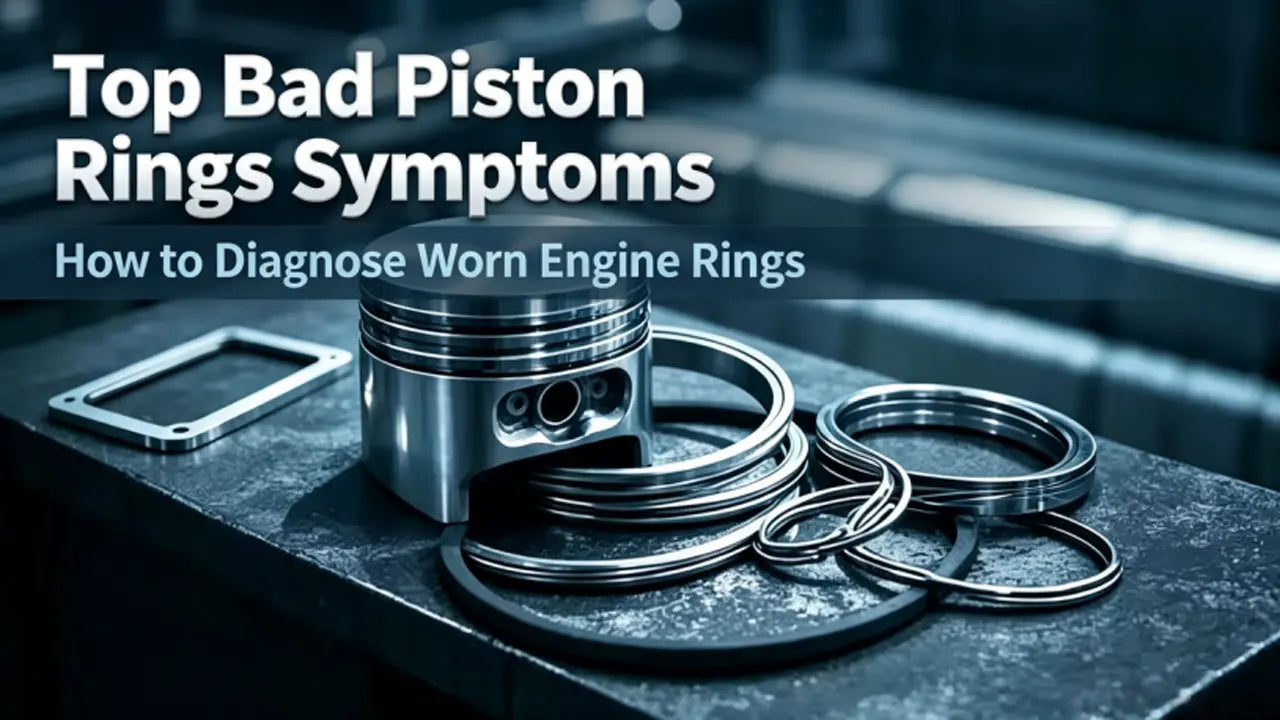
What Do Bad Piston Rings Look Like?
You will never see bad piston rings without tearing the engine apart. They hide deep inside the block, so visual inspection only happens during disassembly.
What bad piston rings commonly look like once you get them out:
- Loss of spring tension, rings sit loose inside their grooves
- Ring ends gapped way too wide from heavy wear
- Carbon gunk caked in ring grooves, rings stuck and cannot expand
- Cracked, chipped, or broken ring segments
- Scratched, worn flat ring contact surfaces
Healthy piston rings should spring open firmly, sit snug in their grooves, and have smooth contact faces. Carbon‑gummed stuck rings are extremely common, especially on engines that sit unused or run cheap oil for thousands of miles.
A lot of people hope for some magic additive to free stuck rings. Sometimes additives give minor temporary improvement, but they rarely fix heavily worn or physically broken rings.

How Expensive Is It To Fix Worn Piston Rings?
Let us talk dollars, the part nobody enjoys. Repair costs swing wildly based on your vehicle, engine, and whether you do the work yourself or pay a shop.
If your piston rings are shot, you cannot just swap rings alone in most cases. The engine has to come apart. Shops will usually perform a full engine overhaul.
- DIY parts‑only rebuild kit: $600‑1500
- Professional shop engine overhaul labor + parts: $2000‑4500+
- Full used engine replacement can sometimes be cheaper than a full rebuild, depending on your car model.
If cylinder walls are heavily scored or worn, you will need cylinder boring or honing work, which tacks on extra expense. This is why catching symptoms early saves you piles of cash. Let it go too long, and small ring wear balloons into a wallet‑crushing project.
CTA Tip: Before you commit to any major engine work, always run compression and leak‑down tests first. Confirm piston rings are truly the root cause before you drop thousands of dollars into a rebuild.Key Takeaway
Bad piston rings sneak up slowly and trick many car owners into ignoring warning signs. Blue exhaust smoke, unexplained oil loss, dropping power, rough idle and oil‑fouled spark plugs are your main red flags. Learn to tell bad piston rings apart from failing valve seals with compression and leak‑down testing. Do not rely on noise alone, many failing rings stay surprisingly quiet. You can technically limp short distances with bad piston rings, but extended driving will destroy more expensive surrounding components. Repair costs add up fast, so catch these symptoms before minor wear turns into catastrophic engine failure.
Choose GPQ Auto Parts For Dual‑Guarantee Of Quality And Service
FAQ
Q: Can bad piston rings throw a check‑engine light?
A: Sometimes yes. Misfire codes or rich fuel codes can pop up from oil burning. But you can absolutely have badly worn piston rings with zero check‑engine light at all. Never trust only your dashboard warning lights.
Q: Will engine oil additives fix bad piston rings?
A: Additives may free carbon‑stuck rings and give temporary relief. They cannot repair physically worn, cracked or broken piston rings. Do not count on additives as a permanent cure.
Q: What is the difference between bad piston rings and bad piston rings vs valve seals?
A: Bad valve seals smoke heavily on cold startup and fade when warm. Bad piston rings smoke worst under hard acceleration. Compression test will show low compression for worn piston rings.
Q: How long can I drive with bad piston rings?
A: There is no set mileage. Some cars chug along for thousands of miles burning oil, others go south very quickly. Every mile increases risk of catalytic converter damage and total engine failure. Limit driving as much as possible.
Q: Can I replace piston rings without pulling the whole engine out?
A: On very few engine designs you can access pistons from below. Most passenger vehicles require full engine disassembly to properly replace piston rings.
Q: What causes piston rings to go bad?
A: Long oil change intervals, poor‑quality oil, overheating, high mileage, carbon buildup, and aggressive driving all speed up piston ring wear.


GPQ Technical Support

Our technical articles are written and verified by master technicians and senior engine rebuilders at GPQ Engine. We ensure every diagnostic guide, OBD-II analysis, and fitment specification meets rigorous OEM-standard criteria.
Recent Post


