
Cart
0
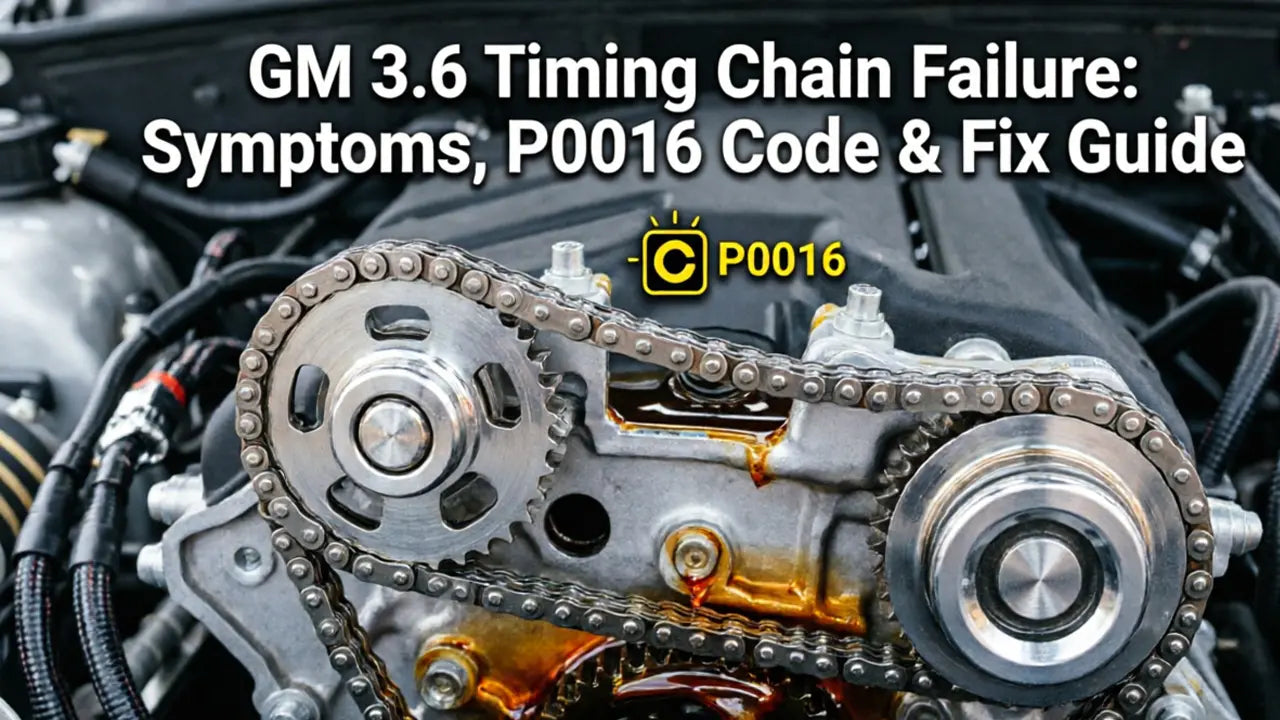
Is your GM 3.6L V6 engine making a terrifying metallic rattling noise on cold starts? Has your check engine light suddenly thrown a P0016 or P0017 code? If so, you’re not alone. You are dealing with one of the most notorious factory flaws in General Motors history: premature timing chain failure.
Before you let a dealership quote you $3,000+ for a repair, take a deep breath. As experts in OEM-standard engine parts at GPQ, we’ve helped thousands of everyday drivers and DIY mechanics diagnose, track down, and permanently fix this exact issue for a fraction of the cost. This comprehensive guide will walk you through the 7 critical warning signs, explain if your car is still safe to drive, break down the real repair costs, and show you exactly how to solve this problem once and for all.
1. What Vehicles Have GM 3.6 Timing Chain Problems?
The GM 3.6L V6 engine—officially designated as the High Feature V6 (HFV6) family—was General Motors' go-to powertrain from 2007 through 2017. While these dual-overhead-cam (DOHC) engines deliver solid horsepower, the early generations (specifically the LY7, LLT, and LFX engine codes) are widely known for rapid timing chain wear.
If you drive one of the following crossover SUVs, sedans, or sports cars from this era, your vehicle utilizes this specific timing chain setup:
- Chevrolet: Traverse (2009-2017), Camaro (2010-2015), Equinox (2008-2017), Impala(2012-2017),Malibu (2008-2012)
- GMC: Acadia (2007-2016),Terrain(2010-2017)
- Buick: Enclave (2008-2017),LaCrosse (2010-2016), Regal (2011-2013)
- Cadillac: CTS (2007-2015),SRX (2007-2016),XTS (2013-2019)
To ensure this specific mechanical issue applies to your exact sub-model, you can filter your year and trim using our GM 3.6L Year-Make-Model vehicle compatibility lookup. Checking your vehicle's specifications first will help you confirm whether your engine uses the early three-chain design or the later, updated timing system.

2. How Does the GM 3.6 Timing Chain System Work?
Unlike traditional single-chain or belt-driven setups, the GM 3.6L High Feature V6 utilizes a highly complex three-chain timing system (often called a multi-stage timing layout). To control the dual overhead camshafts on both cylinder banks, the system relies on a network of interdependent components working in perfect synchronization.
The Anatomy of the System
- Three Roller Chains: One primary chain connects the crankshaft to the intermediate sprockets, while two secondary chains drive the intake and exhaust camshafts for each cylinder bank.
- Hydraulic Tensioners: These tensioners do not use stiff mechanical springs; instead, they rely almost entirely on active engine oil pressure to keep the chains taut
- Plastic Guide Rails: These tracks line the inside of the timing cover, keeping the long chains from whipping or slapping at high RPMs.
- Variable Valve Timing (VVT) Actuators: Located on the ends of the camshafts, these phasers use oil pressure to constantly adjust valve timing for better efficiency.
As the engine runs, pressurized oil flows through micro-passages into the hydraulic tensioners. If the engine oil is clean and at the correct pressure, the tensioners hold the chains perfectly tight against the plastic guides.
However, because these chains are incredibly long and undergo constant thermal stress, the metal links naturally experience microscopic wear over time—a phenomenon known as chain stretch. As the chain elongates and the plastic guides wear thin, the internal pistons of the hydraulic tensioners must extend further and further out to compensate for the slack.
Eventually, the tensioners reach their maximum mechanical limit. Once they can no longer extend, the chain goes slack, leading to timing misalignment, rattles, and trouble codes.
3. 7 Warning Signs of a Failing GM 3.6 Timing Chain
Catching the problem early can save you thousands of dollars in catastrophic engine damage. Look out for these seven warning signs:
- Loud Rattling on Startup: A metallic clattering sound lasting 2-5 seconds during cold starts is the #1 indicator of failing tensioners.
- Check Engine Light (CEL): Usually accompanied by cam/crank correlation codes.
- Rough Idle & Misfires: The engine may shake violently at stoplights due to incorrect valve timing.
- Reduced Power & Hesitation: Sluggish acceleration caused by the VVT system unable to adjust properly.
- Difficulty Starting: The engine cranks longer than normal because compression is lost when valves open at the wrong time.
- Metal Shavings in Oil: Worn plastic guides shed debris into the oil pan, clogging the oil pickup screen.
- Ticking Noise at Idle: A rhythmic ticking that speeds up with RPMs indicates chain slap against the timing cover.
To quickly assess the severity of your vehicle's condition, refer to the table below:
| Symptom | Severity Level | Recommended Action |
|---|---|---|
| Cold-Start Rattling | High | Inspect tensioners & guides immediately |
| P0016 / P0017 Codes | Critical | Stop driving; diagnose timing correlation |
| Metal Shavings in Oil | Critical | Drop oil pan; replace entire timing kit |
4. Understanding P0016 and P0017 Codes
When you scan your vehicle, you will likely see one of these codes:
- P0016 (Crankshaft Position - Camshaft Position Correlation Bank 1 Sensor A): The Engine Control Module (ECM) detects that the intake camshaft is out of sync with the crankshaft.
- P0017 (Exhaust Camshaft Position - Crankshaft Position Correlation): The same issue, but on the exhaust side.
What this means: Your timing chain has stretched beyond the ECM’s ability to compensate using the VVT actuators, or the tensioner has collapsed entirely. The physical timing between the pistons and valves is no longer perfectly aligned.

5. Why Do GM 3.6 Timing Chains Fail?
Several factors contribute to premature failure:
- Poor Oil Maintenance: Dirty or degraded oil starves the hydraulic tensioners of proper pressure.
- Plastic Guide Degradation: The factory plastic guides become brittle over time and shatter.
- Chain Stretch: Metal fatigue causes the chain links to elongate.
- Tensioner Design Flaw: Early-model tensioners lacked a mechanical lock, allowing them to collapse when oil pressure dropped.
6. Can You Drive With A Bad Timing Chain?
Absolutely not. Driving with a bad timing chain is essentially playing Russian roulette with your engine. If the chain stretches too far or jumps teeth, the pistons will collide with the valves. This results in bent valves, destroyed cylinder heads, and a completely ruined engine. If you hear severe rattling or experience sudden power loss, pull over and tow the vehicle immediately.
7. How to Diagnose the Problem
Complete the following diagnostic procedures prior to engine disassembly to accurately locate faults:
- Scan for diagnostic trouble codes (DTCs), specifically P0016 and P0017.
- Conduct a live data test: With the engine running and revving, compare the actual VVT camshaft angles with the commanded target angles to identify deviations.
- Remove the valve cover and inspect the upper timing chain guides for excessive wear, cracking, or missing material fragments.
- Remove the oil pan to check for plastic debris accumulation and measure the clearance of the oil pump pickup screen.
8. How Much Does GM 3.6 Timing Chain Repair Cost?
Replacing the timing chain system on a GM 3.6L V6 is a highly labor-intensive job. Because this engine is tightly packed into the engine bay—especially in transverse-mounted front-wheel-drive crossover SUVs like the Acadia, Traverse, and Enclave—mechanics often have to partially drop the engine subframe just to access the front timing cover.
On average, a professional repair bill breaks down as follows:
- Dealership Rate: $2,800 to $3,800+ (utilizing high-markup OEM dealer parts and premium hourly labor rates)
- Independent Repair Shop Rate: $1,800 to $2,600 (slightly lower hourly rates, but often still subject to a heavy markup on the components).
- The "Why" Behind the Cost: Professional flat-rate labor guides allocate roughly 10 to 14 hours for this job. Labor alone accounts for nearly 75% to 80% of your total shop invoice.
Fortunately, you do not have to pay the steep dealership markup on hardware. By sourcing your own heavy-duty components directly and either undertaking the project yourself or handing the box straight to a trusted local mechanic, you can slash your total repair investment significantly.
Instead of paying standard retail pricing at a service counter, you can upgrade your entire internal engine setup by choosing the GPQ Premium GM 3.6L Complete Timing Chain Kit. This allows you to secure professional-grade, precision-engineered parts at a true factory-direct price point without compromising on structural reliability.
9. What Parts Should Be Replaced Together?
Never fall into the trap of replacing just a single broken chain or a collapsed tensioner. Because the components within the GM 3.6L timing system wear together symmetrically, pairing a brand-new, stiff chain with worn plastic guides or tired VVT phasers will cause the system to fail again within months—forcing you to pay for another 12 hours of intense labor.
To guarantee a permanent fix, a professional-grade overhaul must include:
- The Core Timing Components: All three timing chains (one primary, two secondary), all three hydraulic tensioners, and all six heavy-duty plastic guide rails. These are all found inside a premium, heavy-duty GM 3.6L timing chain kit.
- Essential Sealing Hardware: A complete timing cover gasket set, valve cover gaskets, and silicone RTV sealant. These seals are completely disturbed during disassembly and must be replaced to prevent catastrophic oil leaks later.
- Variable Valve Timing (VVT) Actuators: Also known as cam phasers. If your vehicle logged timing correlation codes or has high mileage, replacing these phasers is highly recommended while the top end is open.
- The "While You Are In There" Insurance: A fresh GM 3.6L water pump kit and a replacement GM 3.6L oil pump kit. Because these auxiliary pumps are bolted directly behind or beneath the timing infrastructure, replacing them now takes less than five minutes of extra effort, saving you from a costly secondary teardown down the road.

10. Recommended Complete Timing Chain Repair Kit
At GPQ, we offer a Complete GM 3.6 Engine Rebuild Kit designed specifically to address these factory flaws. Our kit includes upgraded, OEM-spec components engineered for longevity. Instead of buying individual parts, our all-in-one kit ensures perfect compatibility, saves you money, and provides peace of mind with a comprehensive warranty. Order Your GM 3.6 Timing Chain Kit Today.
11. FAQ
Q: Can I just replace the failing hydraulic tensioners to save money?
A: Absolutely not. While a collapsed tensioner is often the source of the cold-start rattle, it is a symptom, not the root cause. By the time the tensioner fails, the timing chains have already suffered irreversible metal fatigue (chain stretch) and the plastic guides are likely brittle or cracked. Installing new tensioners on stretched chains will cause the system to jump time within a few months, leading to catastrophic internal damage. You must overhaul the entire system at once.
Q: Why does a stretched timing chain trigger the P0016 and P0017 codes?
A: The Engine Control Module (ECM) constantly monitors the alignment between the crankshaft and the camshafts via specialized sensors. As the timing chain stretches or sensor gears slip, the physical synchronization drifts. Once the camshaft position lags behind the crankshaft by more than a few degrees, the ECM can no longer adjust the timing using the VVT phasers. This mechanical misalignment immediately triggers correlation codes like P0016 (Bank 1, Intake) or P0017 (Bank 1, Exhaust).
Q: What happens if my GM 3.6L timing chain snaps or jumps time completely?
A: The GM 3.6L High Feature V6 is a strict interference engine. This means the paths of the intake/exhaust valves and the pistons overlap within the combustion chamber, kept separate only by perfect timing. If a slack chain jumps teeth or snaps, the pistons will physically slam into open valves at thousands of RPMs. This instantly results in bent valves, punctured pistons, and shattered cylinder heads—forcing you to replace the entire cylinder head assembly. or purchase a complete engine overhaul rebuild kit.
Q: Do I need any specialized automotive tools to complete this DIY repair?
A: Yes. Unlike standard engines, you cannot complete a GM 3.6L timing chain replacement with a basic socket set. Crucially, you must use a GM 3.6L Camshaft Holding Tool Kit to lock the camshaft phasers in place before removing the old chains. Without these precision retention blocks, the high valve spring tension will cause the camshafts to violently spin out of sync, making it nearly impossible to realign the mechanical timing without damaging the valves.
Q: How can I prevent premature timing chain wear on my GM V6 engine in the future?
A: The lifeblood of this complex, multi-stage timing system is clean oil and steady hydraulic pressure. To prevent carbon buildup from clogging the micro-passages feeding the tensioners, you should change your oil every 5,000 miles (or 6 months) using a premium full-synthetic oil matching GM’s Dexos standards. Never rely solely on the vehicle’s dashboard Oil Life Monitor, as it often allows oil to degrade past the point where it can properly protect the long roller chains from microscopic friction.

GPQ Technical Support

Our technical articles are written and verified by master technicians and senior engine rebuilders at GPQ Engine. We ensure every diagnostic guide, OBD-II analysis, and fitment specification meets rigorous OEM-standard criteria.
Recent Post


