
Cart
0
Key Takeaway:
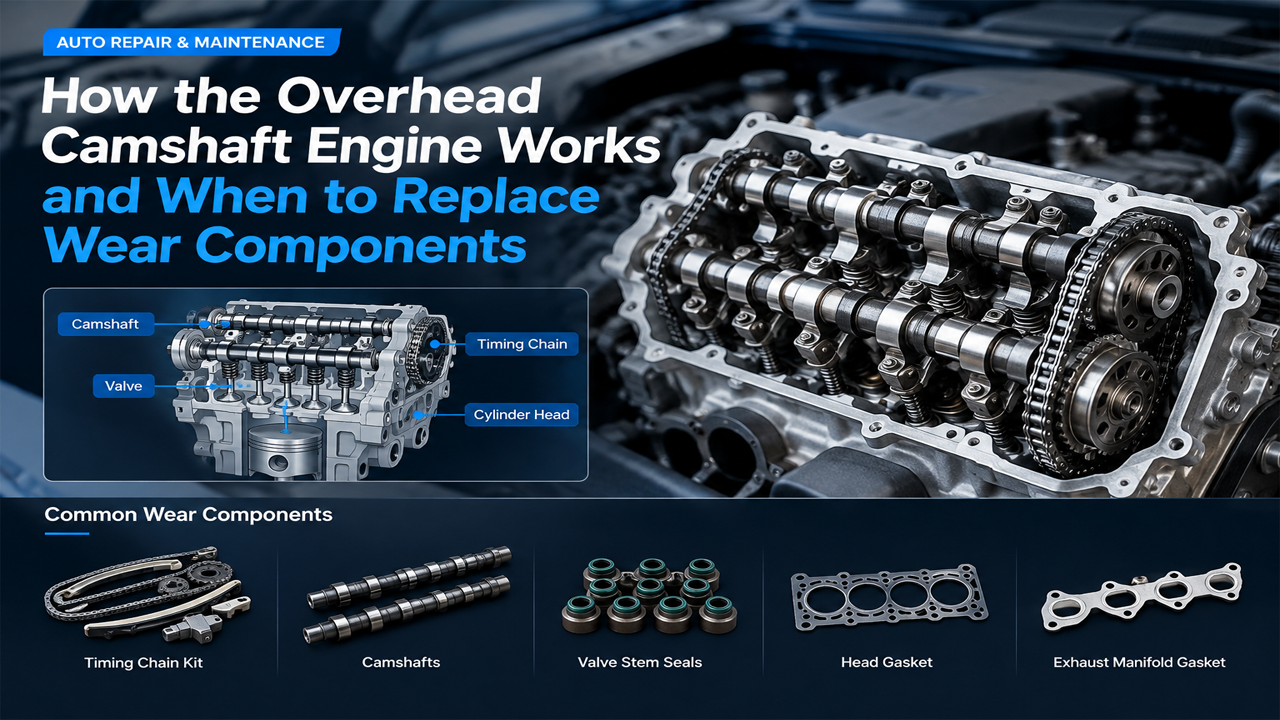
Overhead camshaft (OHC) engines tuck the camshaft right inside the cylinder head instead of down in the block. This design revs freely and controls valves with way more precision, and you’ll find it in two main versions: SOHC and DOHC. Keep an eye out for early warning signs of worn cams and timing hardware, and you can dodge a devastating, wallet-busting engine failure. When shopping for a replacement cam kit, match it tightly to your exact engine specs — grabbing the first cheap kit you find is just asking for garage headaches.
Let’s keep this real. If you’ve hung out in car groups long enough, you’ve definitely seen folks toss around “overhead camshaft engine” like it’s some exclusive gearhead password. You might’ve nodded along like you totally followed, while quietly thinking… wait, what even makes this different from that old pushrod V8 your dad swears will outlive all of us? No shame at all. We’ve all leaned over an engine diagram with a lukewarm garage coffee, pretending we aren’t completely lost.
This guide isn’t one of those stuffy textbook deep dives that put you to sleep by the second paragraph. We’ll break down exactly what an overhead cam engine is, hash out the real differences between SOHC and DOHC, walk you through the red flags that your cam and timing bits are on their last legs, unpack what actually comes inside a full cam replacement kit, and share simple, no-BS rules to pick the correct kit on your first try.
What Is an Overhead Camshaft Engine?
Let’s start with the big one: what is an overhead camshaft engine?
Quick crash course on the old-school way first. Classic pushrod engines stash the camshaft way down low inside the engine block. The cam bumps long metal pushrods, those pushrods move rocker arms, and only then do the intake and exhaust valves open and close. It’s a whole chain of moving parts. Simple, tough, great at low-end grunt — but it hits a hard ceiling when you spin the engine fast.
An overhead camshaft engine (most people just call it an OHC engine) moves that camshaft straight up into the cylinder head, sitting right above the valves. No pushrods required. The lobes on the cam work directly on followers, buckets or rocker arms to actuate the valves.
Why should you care? Fewer links in that valvetrain chain means less weight moving around. A lighter valvetrain lets the engine rev higher, pull in more air, and build power up at the top of the RPM range. That’s why nearly all modern four-cylinders, turbo rigs, sporty V6s and high-performance builds run OHC designs.
This doesn’t automatically make OHC “better” at everything, before you jump to conclusions. Pushrod mills still punch way above their weight for low-end torque, are cheap to rebuild, and will run forever if you change the oil. But overhead cam engines shine when you want snappy high-RPM performance and tight, accurate valve timing for modern emissions and tuning.
Here’s a quick table to keep the two straight:
| Engine Type | Camshaft Location | Biggest Strength | Main Downside |
|---|---|---|---|
| Overhead Camshaft (OHC) | Cylinder head, directly above valves | High rev capability, precise valve control | More complex; timing part wear carries bigger risk |
| Pushrod / OHV | Inside the engine block | Monster low-end torque, simple, cheap to fix | Limited safe RPM ceiling |
Now we’ve wrapped our heads around what an overhead camshaft engine is, let’s jump into the debate that blows up comment sections every single time: SOHC vs DOHC engine differences.

SOHC vs DOHC Engine Differences
If you’ve shopped replacement engine parts even once, you’ve seen SOHC and DOHC plastered everywhere. Both belong to the OHC family, but they drive totally different vibes behind the wheel.
SOHC stands for Single OverHead Camshaft. Just one camshaft per cylinder head handles both intake and exhaust valves. That single shaft carries lobes for intake valves and lobes for exhaust valves all together.
DOHC means Dual OverHead Camshaft. Two separate cams live in each head. One cam only works the intake valves, the other only touches exhaust valves. That’s the core distinction, but let’s talk about what that means for your daily drive.
SOHC setups are simple by design. Fewer parts, less expensive to manufacture, easier to service for basic jobs. Tons of rock-solid commuter vehicles run SOHC. They serve up reliable mid-range power, built to eat highway miles without throwing a fit. The catch? Since one cam has to manage all valves, you can’t tweak intake and exhaust timing independently. You won’t see wild high-RPM power out of most factory SOHC motors.
DOHC is where the fun lives for performance lovers. Separate intake and exhaust cams let engineers tune each side’s timing completely independently. Most newer DOHC engines add variable valve timing (VVT) to one or both cams. The payoff? Snappy response down low and screaming horsepower up high. Sports cars, turbo builds, modern high-output trucks almost always go DOHC.
The tradeoff? More pieces to keep track of. Two cams, extra followers, more valve hardware, and a more involved timing assembly. More parts mean more things that can wear out over time, and repair bills tend to creep up when something breaks.
To keep it dead simple:
- SOHC: One cam per head, dependable, budget-friendly, perfect for a no-fuss daily driver
- DOHC: Two cams per head, tons of tuning room, loves high RPM, more complicated valvetrain
Don’t walk away thinking DOHC is automatically the winner, though. A nicely tuned SOHC can be an unkillable workhorse. Meanwhile, a neglected DOHC can turn into a very expensive garage ornament faster than you can finish a six-pack.

Signs of a Worn Overhead Camshaft and Timing Parts
This section is the one that can save you thousands of dollars and weeks of frustration. Let’s cover the signs of a worn overhead camshaft and timing parts.
Camshafts, timing chains, belts, tensioners and guides almost never fail out of nowhere. They send you warning signals long before disaster strikes. The problem is, way too many of us brush those little hints off as “normal engine noise.” Spoiler alert: it almost never is. Ignore them, and you’re risking bent valves, smashed pistons, and a full engine rebuild that will make your bank account weep.
First up: that rhythmic tick or tap coming right out of the top of your engine. That’s cylinder head noise. Worn cam lobes, flattened followers, or a loose timing chain all create a tapping sound that gets louder as you rev it up. I’ve heard so many folks say “it’s always ticked like that” — trust me, that’s a dangerous mindset.
Next: rough idle and random misfires. When cam lobes wear flat, valves don’t open as far, or they open at the wrong time. Air and fuel delivery goes haywire. Your car shakes at idle, stumbles when you hit the gas, and your scanner will spit out misfire codes like P0300-P0304.
Loss of power, especially higher up in the RPM band. The whole selling point of your OHC engine is how well it breathes at high RPM. If it used to pull hard past 4000 RPM and now it just falls flat and drags, worn cam lobes or stretched timing hardware are top suspects.
Hard starting and long cranking. When timing drifts because a chain stretches or a belt slips, valve timing no longer lines up correctly. The engine struggles to fire consistently, cranking forever before it finally wakes up.
Metal grit in your oil or filter. If you pull the oil filter and find shiny metallic sludge, that’s tiny bits of your valvetrain wearing away. Your engine is literally waving a red flag at you.
One huge thing to remember for OHC engines: most of them are interference engines. If that timing belt or chain snaps, pistons crash straight into open valves. This is not a minor fix. This is the point where you start pricing replacement engines.
If you notice two or more of these symptoms, don’t roll the dice and tell yourself “it’ll make it to the shop.” We’ve all had that “just one more trip” mindset. It rarely ends well.
Please contact us if you encounter the above issues. GPQ has a professional technical team ready to assist you.

What Is Included in a Complete Camshaft Replacement Kit?
Alright, you’ve run the diagnostics, faced the music, and you know you need new cam hardware. Now, what is included in a complete camshaft replacement kit?
Here’s the trap so many DIYers fall into: not all “cam kits” are created equal. Some sellers slap “cam kit” on a listing when all you get is just the bare camshaft. Then you’re stuck hunting down every tiny part one by one, waiting on separate shipments, and paying extra shipping charges. A proper full rebuild kit bundles all the wear items you should swap while you already have the cam pulled out.
A quality complete kit will usually pack:
- Camshaft(s): Single cam for SOHC, matched pair for DOHC
- Valve springs and retainers: Super critical, even for stock replacements. Old tired springs will trash your brand-new cam fast
- Spring seats, valve locks and keepers
- Cam buckets, followers or rocker arms (matches your specific engine design)
- Full timing set: Timing chain / timing belt, sprockets, tensioners and guides
- Gaskets and seals: Cam seals, valve cover gaskets, front cover gaskets
- Often: Assembly lube
Quick friendly reminder: assembly lube is non-negotiable. Those fresh cam lobes need thick lube on startup. Skip it, and you can ruin your brand-new cam in a matter of seconds. Cheap budget kits will leave this out — that’s a warning sign.
The classic mistake I see over and over: folks swap only the camshaft and reuse old timing chains, worn tensioners and fatigued valve springs. Those timing parts have lived the exact same tough life as your old cam. They’re already on borrowed time, and you’ll be tearing the cylinder head apart all over again a few thousand miles down the road. Save yourself the wasted weekend, and replace all those wear items in one go.
You can find the parts you need on GPQ.
How to Choose the Right Replacement Camshaft Kit
Now for the practical part that makes or breaks your project: how to choose the right replacement camshaft kit.
This step splits the people who fix their engine once, and the folks who order the wrong kit, fight through returns, and lose three weekends in the garage.
Rule number one: start with your exact engine specs, not just year/make/model. The same vehicle model can ship with several different OHC engines. A 6.0L SOHC is nothing like a 6.0L DOHC. Bore size, VVT setup, valve count all change which cam will work. Your VIN will pull the correct engine code, and that engine code is your best friend here.
Rule two: know your goal before you buy. Are you just doing a stock replacement to get the car running exactly how it rolled off the factory line? Grab an OEM-spec cam kit. If you’re chasing extra power and better high-RPM flow, go for an aftermarket performance cam — but performance cams need upgraded valve springs, ECU tuning, and sometimes intake/exhaust changes. Don’t drop an aggressive performance cam into your daily driver and expect a smooth idle and good gas mileage. It won’t happen.
Rule three: double-check SOHC vs DOHC. This is the #1 ordering mistake. You’ve got a DOHC engine and accidentally buy a single SOHC cam kit? It simply will not fit. Cross-reference the listing carefully to confirm it matches your cam layout.
Rule four: read the fine print to confirm kit contents. Skim the full description. Confirm it includes the timing hardware, gaskets, springs and seals your rebuild needs. If the listing only shows a photo of a cam with zero mention of timing components, it’s almost certainly just the bare cam.
Rule five: pick a reputable brand. There are super cheap no-name camshafts floating around with soft lobes that wear out in 10,000 miles. Stick to brands that specialize in rebuild parts for your exact engine family. Look for reviews from other people running the same engine, not generic 5-star bot reviews.
Rule six: if your engine has VVT, confirm the kit works with your phaser system. Some cams are built for factory VVT hardware, others are not compatible at all. Slapping a non-VVT cam into a VVT engine will throw codes and run terrible.
Before you click checkout on any cam kit, grab your engine specs, confirm SOHC or DOHC, and verify every part in the kit lines up with your rebuild plan. Ten extra minutes double-checking beats weeks of waiting for returns.
Wrapping It Up
Overhead camshaft engines totally changed how engineers design valvetrains. Moving the camshaft up into the cylinder head unlocked higher RPM potential and precise valve control, splitting into the two popular flavors we know as SOHC and DOHC.
Learning to spot early warning signs for failing cams and timing hardware lets you catch trouble before it snowballs into catastrophic engine damage. When replacement day arrives, a complete cam kit bundles all the wear parts you should swap together, and picking the correct kit all boils down to matching your engine code, cam layout, and what you want out of the engine.
At the end of the day, working on an OHC engine isn’t rocket science. It just pays to know what you’re shopping for and what red flags you’re watching for.
You can find answers on GPQ if you have any questions.
FAQ
Q: Is an overhead camshaft engine better than a pushrod engine?
A: Not one-size-fits-all. OHC engines shine at high RPM and precise valve timing. Pushrod OHV engines dominate for low-end torque, simple service and rugged reliability. Which one is “better” just depends on how you use your vehicle.
Q: Can I swap a SOHC cam to turn it into a DOHC setup?
A: This is almost never a simple bolt-on job. It requires a whole different cylinder head, brand-new valvetrain, reworked timing system and major tuning. For most people, the price tag makes this totally impractical.
Q: How long do camshafts last in an overhead cam engine?
A: With clean oil, regular service and healthy timing parts, most factory OHC cams will clear 100,000 miles easily. Skip oil changes, run dirty oil, or have a failing tensioner, and a cam can wear out way sooner.
Q: What happens if I reuse my old timing chain with a brand-new camshaft?
A: Old timing chains stretch, guides wear down, and tensioners get fatigued. Reusing them creates a huge risk of timing slip or failure not long after your cam install. It’s almost always recommended to swap the full timing set at the same time as the cam.
Q: Do all DOHC engines come with variable valve timing?
A: Nope. VVT is super common on modern DOHC engines, but older DOHC designs run fixed timing without phasers. Always look up your engine specs before ordering replacement parts.

GPQ Technical Support

Our technical articles are written and verified by master technicians and senior engine rebuilders at GPQ Engine. We ensure every diagnostic guide, OBD-II analysis, and fitment specification meets rigorous OEM-standard criteria.
Recent Post


